I’ve Never Seen Putin This Paranoid
 Paul J. Warburg
18 min
When you start lashing out in paranoia against every potential opponent, what you reveal is you actually don't believe yourself to be that powerful. Coups are not the exception to the historical rules, but rather, coups tend to be the natural outworking of these types of systems.
-
 Vladimir Putin
Chapters
-
0:00
Putin's Fear of Replacement
The speaker details Putin's paranoia regarding internal threats and his fear of being replaced by elites. The speaker explains how strict screening makes it difficult for anyone, even close associates, to meet Putin.
-
2:22
Fear of Poisoning
The speaker describes Putin's extreme measures against poisoning, including decoy offices and security protocols. The speaker compares Putin's current behavior to leaders overthrown by coups, noting that paranoia often precedes their fall.
-
4:47
Accusations Against Expatriates
The speaker discusses how Putin labels Russian expatriates as terrorists plotting a shadow government. The speaker uses the case of Kordorkovsky to illustrate how Putin targets former allies to deter others.
-
9:36
Peacocking and Domestic Audience
The speaker argues that these accusations are a display of power aimed at scaring domestic elites rather than stopping real conspirators.
-
10:39
Historical Precedent
The speaker draws parallels between Putin's tactics and those used by Stalin to justify purges of disloyal elements.
-
12:49
Betrayal of Democratic Norms
The speaker contrasts Russia's fear of coups with democratic nations where power is transferred through elections.
-
13:10
Revealing Weakness
The speaker concludes that criminalizing dissent reveals a dictator's lack of confidence in their own power.
-
14:38
Loss of Grip on Power
The speaker details Putin's current weakness due to military struggles, economic issues, and loss of elite loyalty.
-
15:50
Inevitability of Coups
The speaker asserts that coups are a natural outcome for systems like Putin's, not an extreme exception.
Key points
- 0:00
We have seen a progressive state of decline in Vladimir Putin and a progressive state of paranoia that has been revealing itself through his actual actions.
- 0:00
There's a lot of screening that takes place, and it's really hard to get near Putin.
- 2:22
Vladimir Putin also famously has a lot of different decoy offices and decoy meeting rooms that look exactly like the ones that are in the Kremlin.
- 2:22
Just because you're paranoid doesn't mean people aren't actually out to get you.
- 4:47
He is looking at all these people who aren't even necessarily connected, and he is accusing them of being terrorists who are forming a shadow government.
- 4:47
One of the most prominent people in this movement that Putin is now accusing is Kordorkovsky.
- 9:36
This whole attempt is basically, what's the word, peacocking.
- 10:39
Stalin, of course, was a very famously paranoid person.
- 12:49
In legitimate democracies, the path to power, the easiest path to power, isn't a coup.
- 13:10
When you start lashing out in paranoia against every potential opponent, what you reveal is you actually don't believe yourself to be that powerful.
- 14:38
All these things are coalescing to show that Vladimir Putin is losing his grip on power.
- 15:50
Coups are not the exception to the historical rules, but rather, coups tend to be the natural outworking of these types of systems.
Who and where
People · 1
-
Vladimir Putin 51
President of the Russian Federation
Photo 1
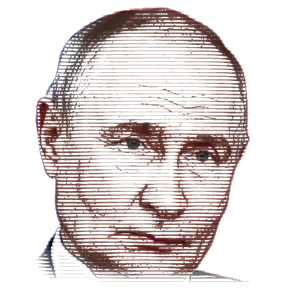
1. Photo: Пресс-служба Президента России, CC BY 4.0, via Wikimedia Commons · Wikidata · redrawn in our house style (Vladimir Putin)
Related episodes
There’s BIG Chatter of a Coup in Moscow
Paul J. Warburg
Putin's paranoia about a coup is likely causing him to make decisions that will ultimately lead to his downfall. His paranoid actions betray a lack of confidence and suggest he is not winning the war.
Russia's Leadership is Now Actively Preparing for Defeat in Ukraine
Paul J. Warburg
Russia's leadership is actively preparing for defeat by prioritizing internal control over military victory. The regime is paralyzed by fear of its own people, making it paranoid rather than strong.
If Russia collapses…what happens next?
Paul J. Warburg
Claims that Russia can never collapse as a result of their war against Ukraine are the most speculative idea of all. There are strong reasons once you understand the internal makeup of Russia to see that people might actually want to split away from that country.
Siberia Now Wants to Secede From Russia
Paul J. Warburg
The war in Ukraine has created conditions where Eastern Russian republics may break away from Moscow, potentially turning to China for protection. If China decides to step in and offer protection to independence movements, it could be the catalyst that triggers the breakup of Russia.
Russia Just Declared War On My Channel
Paul J. Warburg
Russia uses disinformation to keep Western societies disengaged and apathetic rather than unified against them. Russia fears truth and unity, proving that light overcomes darkness.
AI-generated summary · model qwen3.5:9b-12k · prompt version whole-3.window-7.combine-10.s-f4be8e ·
video id SsOVaITpvi4 ·
Watch on YouTube