The Future of Piracy (ARRRGH!)
 Peter Zeihan
6 min
Nations dependent on sea transport will fight pirates, while self-sufficient nations may support them. India will likely become a hybrid power supporting piracy to its east while opposing it to its west.
Chapters
-
0:00
The Dividing Line Between Pro-Pirate and Anti-Pirate States
Explains that self-sufficiency determines whether a nation supports or fights piracy. Identifies France, Italy, Southeast Asia, and Japan as nations needing naval presence.
-
2:31
The Emergence of Land-Based Power Blocks
Describes how Turkey, India, and Egypt form regional blocks hostile to outsiders. Argues India will support piracy to its east while opposing it to its west.
-
5:06
The Future of Global Energy Regulation
Concludes that future trade depends on stable partnerships rather than global sea lanes.
Key points
- 0:00
The degree of self-sufficiency determines whether a nation becomes a pirate or fights pirates.
- 0:00
Nations dependent on sea transport view piracy as a threat to national security.
- 0:00
France and Italy must protect sea lanes because they import almost all oil and natural gas.
- 0:00
Southeast Asia and Japan maintain naval presence due to poor natural resources and geography.
- 2:31
Turkey enforces protection rackets in the eastern Mediterranean using land-based energy sources.
- 2:31
Israel, Egypt, and Turkey could form a powerful block hostile to external powers.
- 2:31
India becomes self-sufficient in food while becoming a massive industrial power.
- 2:31
India will support piracy to its east but oppose it to its west.
- 4:49
India is the country most likely to engage in state-sponsored privateering.
- 5:06
Future global trade depends on regulating energy flow from the Persian Gulf.
Related episodes
The Future of Tourism: Part 2
Peter Zeihan
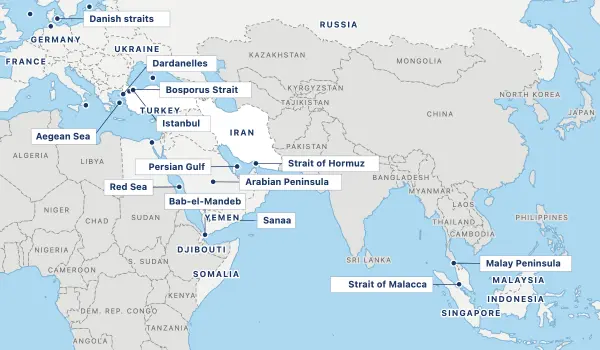
Europe faces demographic collapse and Russian expansion while the Middle East relies on fragile oil systems that require new security guarantors. Turkey will become one of the fastest-growing, most successful, most powerful countries in the world for decades to come.
 9:10
The Collapse of the World's Strategic Straits - Part 2
Peter Zeihan
The world is shifting from free international waterways to regulated choke points where local powers charge tolls and restrict global trade. This shift creates a new global order where nations near these straits hold immense leverage over energy and commerce.
Say Goodbye to the World's Trade Routes
Peter Zeihan
Globalization breaks down and military alliances fracture, causing multiple trade routes to face danger simultaneously. Middle East shipments look really bad, the Red Sea is not much better, and the Baltic is something to keep an eye on.
India: Overhyped or Global Player
Peter Zeihan
India matters not as a traditional global power but as a strategic broker controlling energy access. If the United States steps back, India will become the broker for global energy trade.
 3:41
China Gets a New Base in Southeast Asia
Peter Zeihan
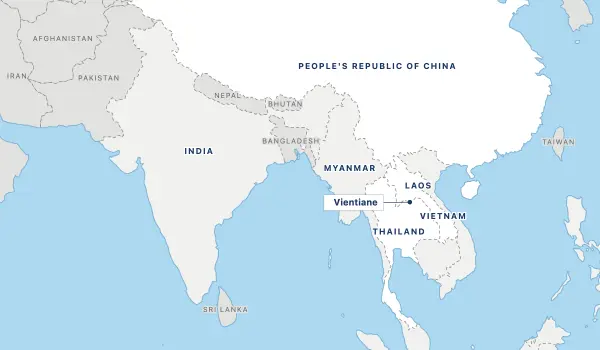
China is building a self-sufficient base in Laos to project power across Southeast Asia despite the high risk of conflict with Thailand. Thailand represents a significant strategic hurdle because it is the most capable country in the region with a history of resisting foreign control.
AI-generated summary · model qwen3.5:9b-12k · prompt version whole-3.window-7.combine-10.s-f4be8e ·
video id hCeQg_GuAAc ·
Watch on YouTube