The Collapse of the World's Strategic Straits - Part 2
 Peter Zeihan
9 min
The world is shifting from free international waterways to regulated choke points where local powers charge tolls and restrict global trade. This shift creates a new global order where nations near these straits hold immense leverage over energy and commerce.
Chapters
-
0:00
The New Era of Waterway Regulation
International law regarding naturally occurring waterways is changing as Iran may begin charging tolls, setting a precedent for other states to demand control and financial assets from strategic straits.
-
0:55
The Vulnerability of the Bab el-Mandeb
Following Hormuz, the Bab el-Mandeb becomes the next target due to weak local governance in Djibouti, Somalia, and Yemen, allowing Iran-backed groups like the Houthis to enforce tolls or attacks.
-
4:45
The Strategic Shift at the Turkish Straits
Turkey will immediately begin regulating the Bosporus and Dardanelles once Iran succeeds, leveraging its functional navy and army to interdict every ship passing through these waterways. Denmark, Sweden, Finland, and Norway will unite to enforce tolls on the Danish Straits, severely limiting Russia's ability to export northern commerce to the Atlantic.
-
7:13
The Global Rewiring of Commerce
Global trade is being rewired as countries near these straits gain leverage while distant nations face trapped regional products with no good sourcing options.
Key points
- 0:00
Iran will likely charge tolls or fees for ships passing through the Strait of Hormuz before the end of the year.
- 0:00
Once Hormuz becomes regulated, other states will follow suit to demand control of waterways and gain financial assets.
- 0:55
The Bab el-Mandeb is the first strait to fall into this new regulated pattern after Hormuz.
- 0:55
Weak governance in Djibouti, Somalia, and Yemen allows Iran-backed groups like the Houthis to enforce tolls or attacks.
- 0:55
France will likely join the multi-sided conflict over regulating the Bab el-Mandeb due to its changing international order.
- 4:45
Turkey will immediately begin regulating the Bosporus and Dardanelles once Iran succeeds in enforcing its will on the Persian Gulf.
- 4:45
The Turkish Straits connect the Black Sea to the Mediterranean, allowing Turkey to interdict every ship passing through.
- 4:45
Denmark, Sweden, Finland, and Norway will unite to enforce tolls on the Danish Straits against Russian commerce.
- 7:13
Russia's access to the world as an exporting power becomes limited to just what it can get out through the Pacific.
- 7:13
Countries closer to these straits gain leverage to cut deals with powers holding control over global energy flows.
- 7:13
Global commerce is being rewired as products become trapped regionally rather than flowing globally.
On the map
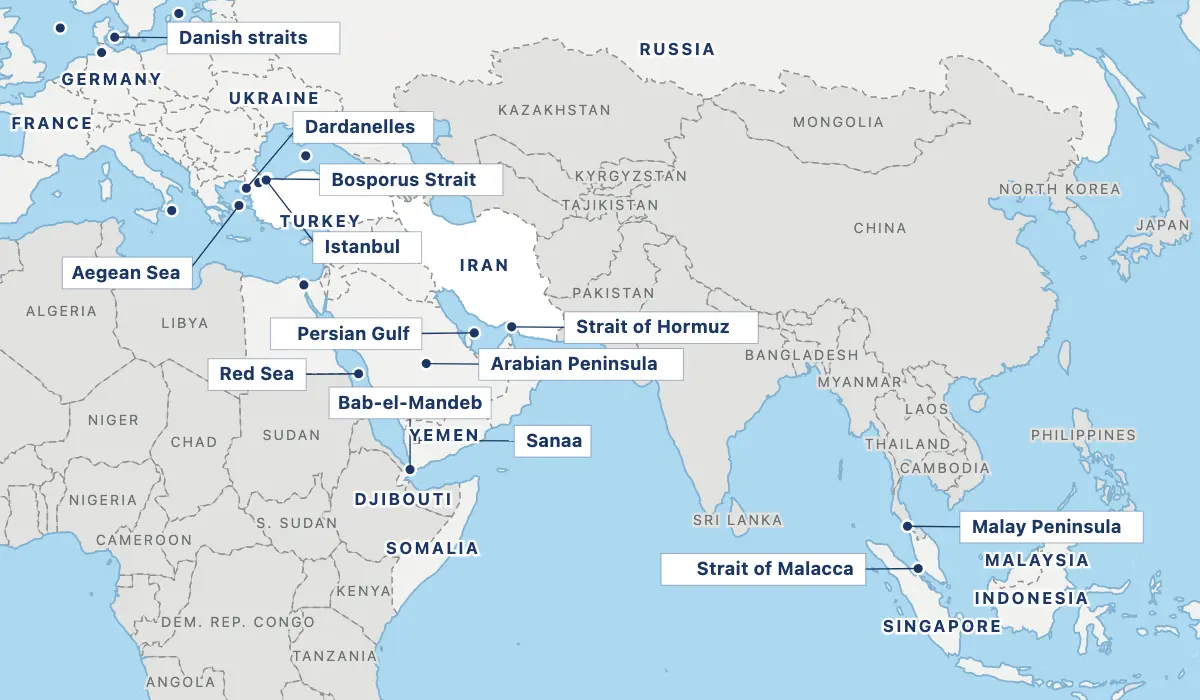
Who and where
Places · 42
- Turkey 7
- Strait of Malacca 6
- Strait of Hormuz 7
- Iran 8
- Danish straits 3
- Bab-el-Mandeb 3
- France 5
- Indonesia 3
- Malaysia 3
- Singapore 3
- Somalia 3
- Sweden 3
- Russia 5
- Pacific Ocean 2
- Sanaa 2
- Arabian Peninsula 2
- Djibouti 2
- Finland 2
- Indian Ocean 2
- Red Sea 2
- Northeast Asia 2
- Yemen 2
- Persian Gulf 2
- Germany 2
- Europe 2
- Ukraine 2
- Aegean Sea 1
- Atlantic Ocean 1
- Bosporus Strait 1
- Dardanelles 1
- Kiel Canal 1
- Malay Peninsula 1
- North Sea 1
- Norway 1
- Sea of Marmara 1
- Suez Canal 1
- Istanbul 1
- Mediterranean Sea 1
- Panama 1
- Black Sea 1
- Baltic Sea 1
- Middle East 1
Organisations · 2
- ASEAN 1
- NATO 1
Related episodes
 5:27
Global Shipping Comes Under Attack
Peter Zeihan
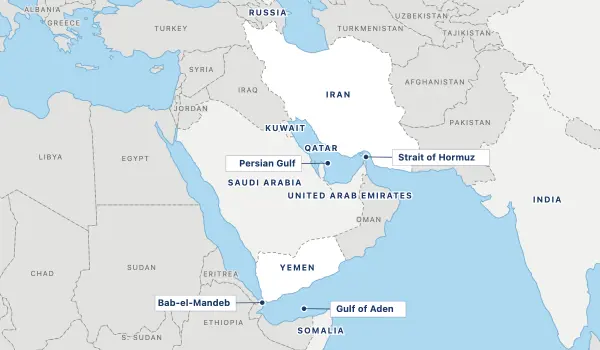
No country can defend all eight major transit choke points simultaneously. No nation or coalition can keep global sea lanes safe anymore.
 4:49
The Collapse of the World's Strategic Straits
Peter Zeihan
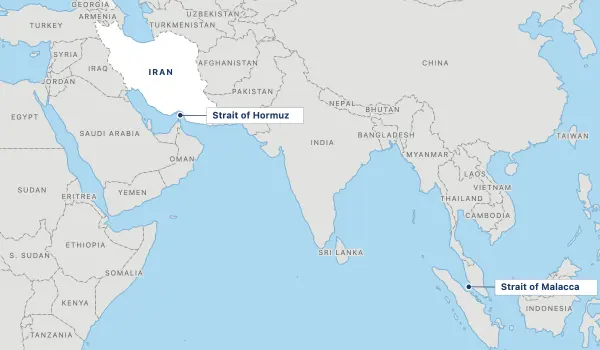
The United States cannot force Iran to keep Hormuz open, leading to its transformation into a toll system. Turning Hormuz into a toll system will formally or informally break over a century of international maritime law.
 6:05
A New Explosive Threat in the Persian Gulf
Peter Zeihan
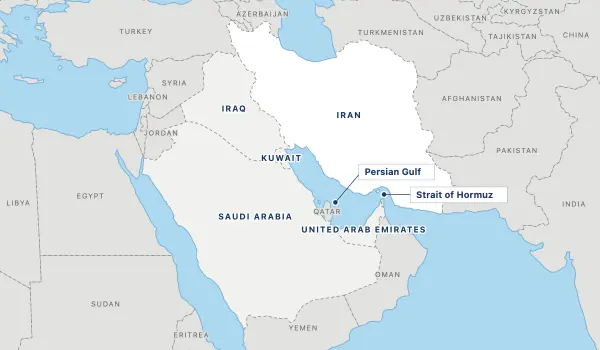
Conventional commercial shipping in the Persian Gulf is probably going to collapse because there is no good defense against speedboat attacks. The cost for the civilian shipping sector to try to cope with this is immense and will absolutely change the cost structure of how shipping happens.
 6:07
The Diesel Shortage Hits America
Peter Zeihan
Diesel shortages will reverberate through the entire American economy for months. The US faces guaranteed transport problems affecting everything moved throughout the country for at least the next 18 months.
Why Bypassing Hormuz is a Pipe Dream
Peter Zeihan
Bypassing the Strait of Hormuz via pipelines is a pipe dream because all proposed routes are vulnerable to Iranian strikes except the Turkish route, which is too small and expensive to solve the problem. The Trump administration believes this is a quick and easy fix, but it is not.
AI-generated summary · model qwen3.5:9b-12k · prompt version whole-3.window-7.combine-10.s-f4be8e ·
video id xDOkW-bKMOg ·
Watch on YouTube