Can AI-Driven Robots Save Japan?
 Peter Zeihan
5 min
Japan must develop autonomous robots because it cannot import labor due to racism and faces a massive workforce shortage. The project looks pretty promising as it merges long-term Japanese automation efforts with new frontier technology.
Chapters
-
0:00
Japan's AI Robot Strategy
The Japanese government is developing its own industrial and agricultural robot models using NVIDIA chips, aiming for autonomous operation in various sectors by late next year.
-
0:39
Challenges in Chip Acquisition
Japan faces delays because NVIDIA prioritizes American hyperscalers, pushing Japan's chip delivery to the second quarter of next year. Japan must replace human labor with robots due to a projected shortage of over 11 million workers by 2030. Japan starts from a level well ahead of others due to decades of prior automation experience.
-
3:01
Immigration Barriers
Japan cannot rely on global talent pools because it remains one of the world's most racist societies.
-
3:29
Autonomous Operation Requirements
Robots must operate on-site without digital lag to make real-time decisions in industrial and healthcare settings. This project offers a partial solution to a global labor shortage affecting over 100 aging countries. The initiative looks promising as it merges Japan's long-term automation efforts with frontier technology.
Key points
- 0:00
The Japanese government announced a program to develop its own model for industrial and agricultural and healthcare robots.
- 0:00
Japan is buying about 28,000 NVIDIA chips to build a customized data center on the small side of only 140 megawatts.
- 0:39
The goal is to create a model connecting vision and language with action for autonomous robot operation.
- 0:39
Japan must wait until the second quarter of next year to receive its first chips due to American priority.
- 0:39
Japan expects a workforce shortage of more than 11 million workers as soon as 2030.
- 3:01
Japan is one of the world's most racist societies and cannot tap the global talent pool for high-tech workers.
- 3:29
Robots must operate on site without digital lag to make immediate decisions in industrial settings.
- 3:29
This project may offer a partial solution to a global labor shortage affecting over 100 aging countries.
- 0:39
Japan starts from a level well ahead of everybody else in the world due to decades of automation experience.
- 3:29
The initiative merges what the Japanese have been doing for the last 40 years with frontier tech developed only just today.
On the map

Who and where
Places · 4
- Japan 11
- United States 7
- Philippines 1
- India 1
Organisations · 1
- Nvidia 2
Related episodes
 3:31
The AI Race: U.S. vs. China
Peter Zeihan
China cannot compete in AI because export restrictions prevent them from building the necessary high-end hardware. The structural issues regarding data and ethics are irrelevant because the race comes down to hardware access.
 3:58
My Two Cents on the AI Debate
Peter Zeihan
The current debate over AI safety is actually a positive sign of open conversation. The current debate does not need to bear fruit until the 2040s when supply chains are rebuilt.



 +1
 21:55
China’s Biggest Problem Just Got SO MUCH Worse
 Paul J. Warburg
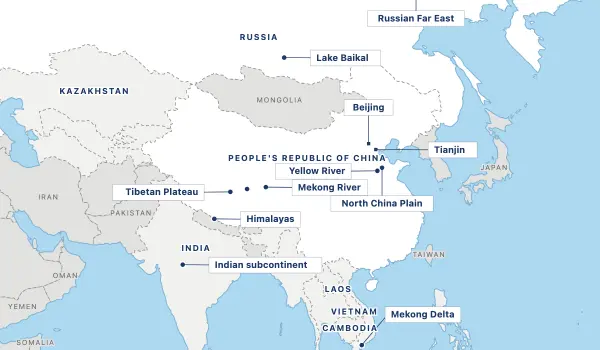
China's water shortage puts them at a structural disadvantage against AI competitors and increases their incentive to provoke water conflicts. China's only real solution is geopolitical, potentially involving damming rivers or bringing water from Russia.
 5:44
Building Out the Power Grid: Large Power Transformers
Peter Zeihan
The United States cannot expand its grid by 50% to support reindustrialization because it lacks domestic large transformer production and faces severe permitting delays. Without significant changes in federal policy and domestic manufacturing, the US will fail to maintain its grid or reindustrialize.
 13:20
Data Centers: A Necessary Evil...Kinda
Peter Zeihan
Data centers are necessary for modern economic function because removing them would force a return to manual paper-based systems resulting in significantly lower standards of living. While data centers have negative effects like high energy use, eliminating them would condemn millions to low-value jobs and drastically reduce personal incomes.
AI-generated summary · model qwen3.5:9b-12k · prompt version whole-3.window-7.combine-10.s-f4be8e ·
video id NQlL59f4OFY ·
Watch on YouTube