Data Centers: A Necessary Evil...Kinda
 Peter Zeihan
13 min
Data centers are necessary for modern economic function because removing them would force a return to manual paper-based systems resulting in significantly lower standards of living. While data centers have negative effects like high energy use, eliminating them would condemn millions to low-value jobs and drastically reduce personal incomes.
Chapters
-
0:00
The Political Brouhaha and AI Hardware
Controversy surrounds data centers due to their high electricity and water consumption in rural areas, though much of the opposition stems from artificial intelligence systems. These systems rely on graphics processing units that generate intense heat, requiring continuous 24-7 cooling operations. The core component is a small chip that must run constantly, creating significant thermal challenges.
-
2:33
Cooling Demands and Water Usage
Over 80% of water use and over half of electricity consumption in data centers comes from cooling systems. Older systems use evaporation towers while newer closed-circuit loops still require millions of gallons of water. Newer chip architectures incorporating internal cooling are not expected to arrive until after the current decade.
-
4:06
The Multi-Year Production Lag
Creating new chips involves a complex, multi-month process of etching, baking, and cooling silicon wafers before they can be broken into components. The total timeline from design to having enough finished products for a data center spans five to seven years. Consequently, significant improvements in efficiency or hardware will not happen before 2030.
-
5:06
Debunking Foreign Manipulation Claims
Claims that China is manipulating public opinion against data centers are dismissed as a non-factor due to their lack of capability. While bot farms exist, only a tiny fraction participate in anti-AI spaces, and they lack an AI sector or chip manufacturing capacity. Therefore, foreign manipulation is considered a non-factor in the current opposition. Data centers cannot rely on solar or wind power due to reliability issues, as they require constant operation without interruption. The only viable alternatives are nuclear, coal, or natural gas, with no single data center currently running entirely on renewable sources. Small modular reactors remain theoretical prototypes that cannot yet meet the gigawatt-scale demands of these facilities.
-
7:47
The Three Categories of Data Center Functions
Data centers handle big data processing, AI, and graphics processing, effectively replacing old mainframes for heavy computational tasks. They also manage everyday digital interactions like email, banking, and insurance claims that require instant access to stored information. Finally, they process all modern communication by converting voice and social media activity into zeros and ones. Eliminating data centers would force a return to manual paper-based systems, requiring millions of low-value-added workers for inventory and processing. This shift would result in slower service, reduced product variety, longer lead times, and significantly lower personal incomes. Without these facilities, society would dial back the clock to a far lower standard of living.
Key points
- 0:30
Most opposition to data centers stems from artificial intelligence systems requiring graphics processing units.
- 1:16
Over 80% of water use and over half of electricity consumption in data centers comes from cooling systems.
- 3:37
The timeline from designing a chip to having enough finished products for a data center spans five to seven years.
- 4:27
China lacks the capability to manipulate public opinion against data centers due to an absence of an AI sector.
- 5:55
There is not a single data center on the planet that runs on solar or wind at all.
- 5:55
The cloud is 100% data centers, handling everything from big data processing to personal email and banking.
- 11:36
Removing data centers would force a return to manual paper-based systems requiring millions of low-value-added workers.
- 11:36
Eliminating data centers would result in slower service, reduced product variety, and longer lead times.
- 11:36
A world without data centers would condemn millions of Americans to jobs with no value add.
- 11:36
Without data centers, society would dial back the clock to a far lower standard of living and personal incomes.
On the map
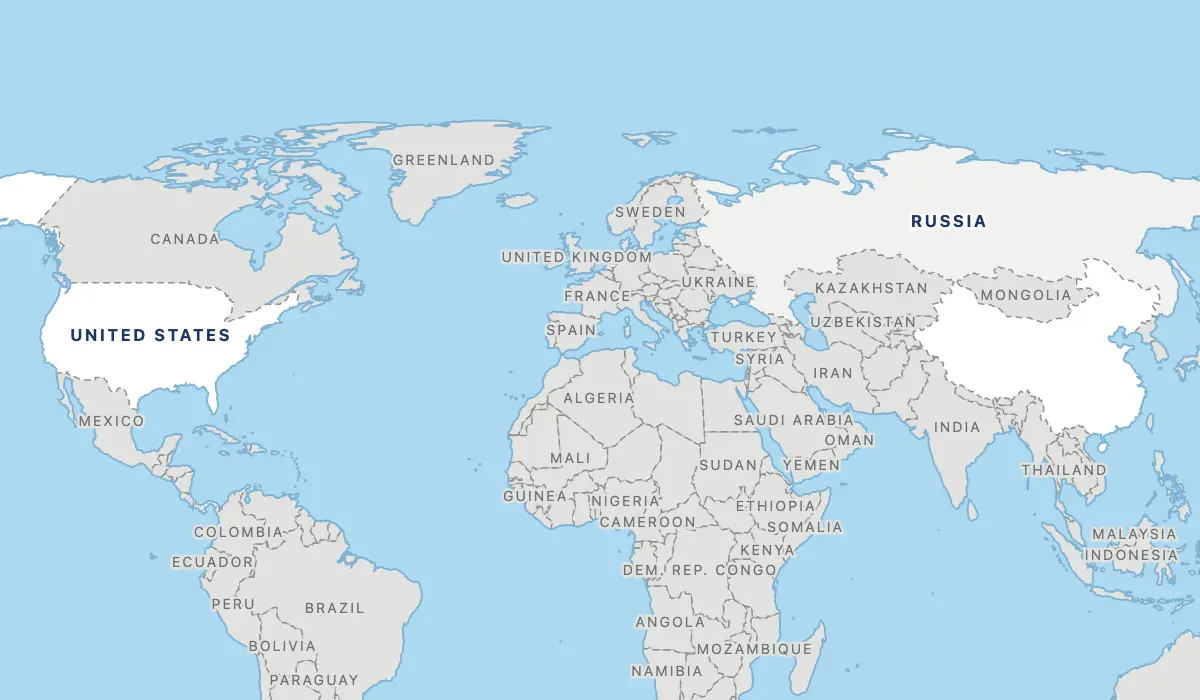
Who and where
Places · 3
- People's Republic of China 4
- United States 3
- Russia 2
Related episodes
 6:11
Trump Might Be Onto Something with Data Center Energy
Peter Zeihan
The proposal indicates significant changes are coming if pushed forward. The proposal is a potential solution to current problems but faces serious political hurdles.

 22:01
Russia’s Tech Companies Just Entered Full Panic Mode
 Paul J. Warburg
Russia is facing a permanent, systemic crisis in its cloud infrastructure that will worsen over time due to destroyed capacity and lack of global redundancy. The true scale of the damage remains hidden because both cloud companies and the Russian government suppress negative information to protect their interests.
 3:58
My Two Cents on the AI Debate
Peter Zeihan
The current debate over AI safety is actually a positive sign of open conversation. The current debate does not need to bear fruit until the 2040s when supply chains are rebuilt.



 +1
 5:44
Building Out the Power Grid: Large Power Transformers
Peter Zeihan
The United States cannot expand its grid by 50% to support reindustrialization because it lacks domestic large transformer production and faces severe permitting delays. Without significant changes in federal policy and domestic manufacturing, the US will fail to maintain its grid or reindustrialize.
 3:31
The AI Race: U.S. vs. China
Peter Zeihan
China cannot compete in AI because export restrictions prevent them from building the necessary high-end hardware. The structural issues regarding data and ethics are irrelevant because the race comes down to hardware access.
AI-generated summary · model qwen3.5:9b-12k · prompt version whole-5.window-7.combine-10.s-f4be8e ·
video id iRCnengWjLE ·
Watch on YouTube