Korean Exports Skyrocket Thanks to AI
 Peter Zeihan
5 min
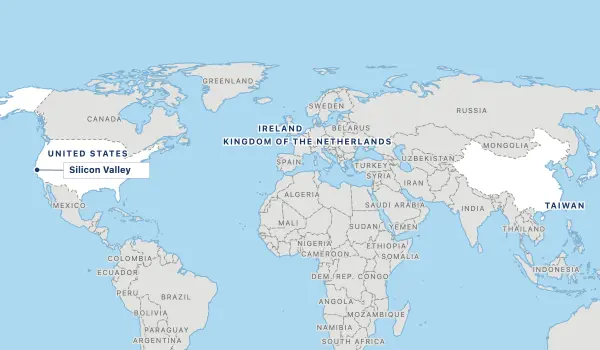
The current AI boom relies on a fragile global supply chain involving over 50 countries. We must build everything possible now because the current system will soon fail.
Chapters
-
0:00
Korean Export Surge
Korea's exports hit a record $100 billion in one month, a 70% increase driven by AI hardware. Three key components make AI work: GPUs, NAND memory, and DRAM.
-
1:10
Korean Dominance in DRAM
Korea produces 90% of the world's high-end DRAM, which is critical for AI.
-
3:27
Global Supply Chain Fragility
AI supply chains require over 50 countries; losing one piece stops production. The current integrated system will soon fail, requiring a decade-long rebuild.
Key points
- 0:00
Korea's exports topped $100 billion in one month.
- 0:00
This export increase represents a 70% rise from last year.
- 0:00
Almost all the increase relates to artificial intelligence.
- 0:00
High-end chips typically use extreme ultraviolet technology.
- 0:00
Most high-end chips are fabricated in Taiwan.
- 1:10
About 80% of global supply comes from Taiwan.
- 1:10
NAND memory stores data even when power is off.
- 1:10
DRAM holds data temporarily as it moves between GPUs.
- 1:10
Korea produces 90% of the world's high-end DRAM.
- 3:27
The US dominates designing the system geometry.
- 3:27
AI supply chains require over 50 countries to function.
Related episodes
 3:31
The AI Race: U.S. vs. China
Peter Zeihan
China cannot compete in AI because export restrictions prevent them from building the necessary high-end hardware. The structural issues regarding data and ethics are irrelevant because the race comes down to hardware access.
South Korea Goes All-In on Drones
Peter Zeihan
South Korea must adopt drone warfare because its demographic collapse and North Korean artillery threat make traditional armies obsolete. The DMZ in the Korean Peninsula is likely to be at the top of the list for strategic environments that will change.
The Semiconductor Frontier
Peter Zeihan
The semiconductor industry faces a critical juncture where new technology could either revive Intel or leave it as a solid second-best player, all while remaining dangerously dependent on fragile global supply chains. While there is a little sliver of hope that high numerical aperture technology might simplify supply chains, the industry remains overextended and threatened.

Bonus Video: The Death of the US Tech Sector: Part 1
Peter Zeihan
Tariffs actively disincentivize American participation in global supply chains. When deglobalization gets worse and China goes away, we will have very little to work from.
 13:20
Data Centers: A Necessary Evil...Kinda
Peter Zeihan
Data centers are necessary for modern economic function because removing them would force a return to manual paper-based systems resulting in significantly lower standards of living. While data centers have negative effects like high energy use, eliminating them would condemn millions to low-value jobs and drastically reduce personal incomes.
AI-generated summary · model qwen3.5:9b-12k · prompt version whole-3.window-7.combine-10.s-f4be8e ·
video id yo5YM0QJqi0 ·
Watch on YouTube