Status Update on the Persian Gulf
 Peter Zeihan
4 min
The current peace deal lopsidedly serves Iran's purposes by allowing only them unrestricted access to the world's most important energy waterway. This situation is an ongoing catastrophic economic and strategic event for the world as a whole.
Chapters
-
0:00
Current Shipping Status
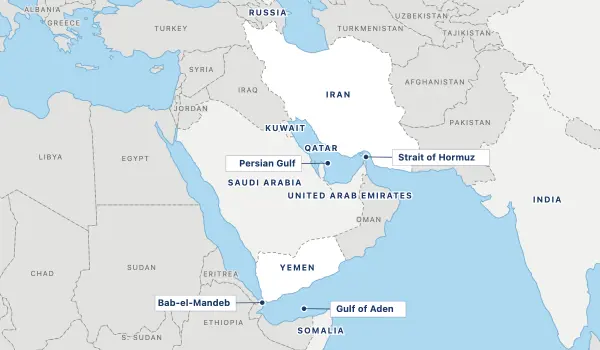
Cargo movements are slow as the Strait of Hormuz remains open for Americans but closed for Iranians, leaving over a thousand ships stranded and reducing daily tanker departures to about twenty. Saudi Arabia has restarted exports via a bypass pipeline, while the UAE uses Fajara port outside the strait, but Kuwait and Iraq show no movement.
-
2:14
Strategic Implications
The current deal allows only Iran unrestricted access to the world's most important energy waterway while others face fees or tolls.
Key points
- 0:00
Over a thousand ships were stranded in the Persian Gulf when the conflict began.
- 0:00
Approximately 35 million barrels of crude have exited the region so far.
- 0:00
Saudi Arabia is shipping most exports through Red Sea pipelines rather than the strait.
- 0:00
Fewer than fifteen ships transited into the Persian Gulf recently.
- 0:00
Only half of the recent incoming ships were tankers.
- 2:14
Before the war, 100 to 150 ships transited each way daily.
- 2:14
The current peace deal allows only Iran unrestricted access to the strait.
- 2:14
Iran is openly discussing charging fees or tolls for using the waterway.
- 2:14
Oman is coordinating with Iran to enforce these new charges.
- 2:14
The situation represents a catastrophic economic and strategic event for the world.
- 3:26
Regional oil fields are not expected to return to full production this year.
Related episodes
The Energy Crisis: Downstream Impacts
Peter Zeihan
The combination of halted Persian Gulf exports and the loss of Russian crude will cause a severe global energy crisis within weeks. It took a war launched by Donald Trump on Iran in order to make Iranian oil legal again.
 5:27
Global Shipping Comes Under Attack
Peter Zeihan
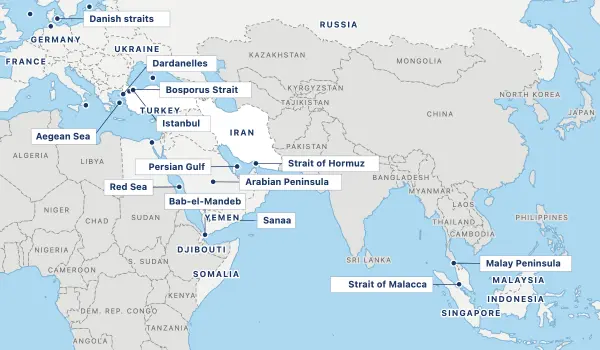
No country can defend all eight major transit choke points simultaneously. No nation or coalition can keep global sea lanes safe anymore.
This Ain't Your Father's Tanker War
Peter Zeihan
The U.S. Navy no longer has the ability to impose a strategic reality on the local basis against a fourth-rate security power. It is very, very difficult to restore access to waterways during future conflicts.
 9:10
The Collapse of the World's Strategic Straits - Part 2
Peter Zeihan
The world is shifting from free international waterways to regulated choke points where local powers charge tolls and restrict global trade. This shift creates a new global order where nations near these straits hold immense leverage over energy and commerce.
Why Nobody Came to Help the U.S in Iran
Peter Zeihan
Allies did not help because they lack independent naval power and were excluded from intelligence sharing. The situation is a trap caused by a leader who refuses to surround himself with anyone but sycophants.
AI-generated summary · model qwen3.5:9b-12k · prompt version whole-3.window-7.combine-10.s-f4be8e ·
video id PhpzX8Gp_Ys ·
Watch on YouTube