Nvidia Purchases $5 Billion of Intel Stock
 Peter Zeihan
4 min
The partnership between NVIDIA and Intel does not speed up the process or move the needle for anyone. NVIDIA has design capabilities but lacks the manufacturing technology required to compete at the highest level.
-
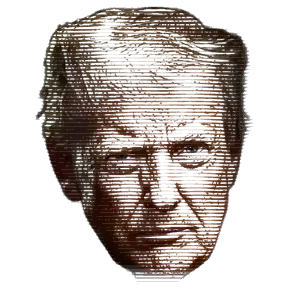 Donald Trump
Chapters
-
0:00
Intel's Market Position and NVIDIA's Investment
Peter Zeihan discusses NVIDIA's $5 billion purchase of Intel stock, noting Intel's struggle to compete with TSMC despite being a major American manufacturer.
-
0:45
The Semiconductor Development Process
Zeihan explains the complex ecosystem required to build chips, involving design firms, fabrication plants, and hundreds of specialized component suppliers. The partnership gives NVIDIA access to non-cutting-edge chips but does not provide the advanced manufacturing technology needed for top-tier nodes.
Key points
- 0:00
Intel is significantly discounted in the market because it is not TSMC.
- 0:45
The U.S. government took a 10% share of Intel weeks prior to this purchase.
- 0:45
NVIDIA will hold roughly a 4% share of Intel after this transaction.
- 0:45
Chip production requires a design firm to create strategic architecture first.
- 0:45
A thick instruction booklet guides the fabrication of every tiny chip component.
- 0:45
Hundreds of companies are involved in building individual pieces and testing chips.
- 0:45
NVIDIA has been criticized for its inability to apply technological sanctions to China.
- 3:11
The investment gives NVIDIA an inside track for non-cutting-edge chip communication.
- 3:11
Intel needs TSMC and ASML technology to move up to one or two nanometers.
- 3:11
NVIDIA possesses design capabilities but lacks the manufacturing technology for advanced nodes.
Who and where
People · 1
-
Donald Trump 1
President of the United States (2017–2021; since 2025)
Photo 1
1. Photo: Daniel Torok, Public domain, via Wikimedia Commons · Wikidata · redrawn in our house style (Donald Trump)
Related episodes
The Semiconductor Frontier
Peter Zeihan
The semiconductor industry faces a critical juncture where new technology could either revive Intel or leave it as a solid second-best player, all while remaining dangerously dependent on fragile global supply chains. While there is a little sliver of hope that high numerical aperture technology might simplify supply chains, the industry remains overextended and threatened.
Where Would I Put a US Semiconductor Fab?
Peter Zeihan
The Midwest is the only viable location for a full semiconductor sector transplant. The obstacles are many, but the investments will be huge.

Debunking the Biggest ‘Success’ Story of Trump’s Tariffs
Paul J. Warburg
Confusing correlation with causation is a common mistake used to win arguments without being correct. TSMC moves to the U.S. due to fear of Chinese attacks on Taiwan, not because tariffs make sense financially.
Trump Trade Talks: Japan Gets a Deal
Peter Zeihan
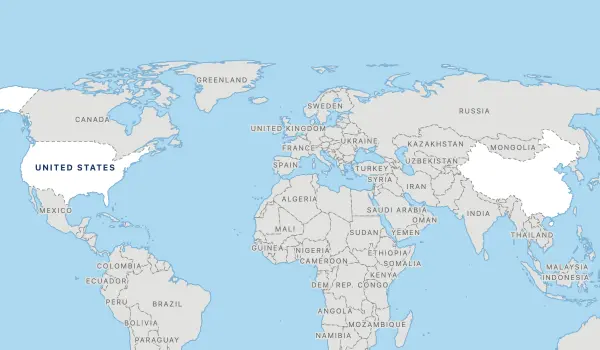
The headline figure for tariffs going for goods coming from Japan to the United States is now 15%. We are, once again, at the beginning of this process, we are nowhere near the end.
 3:58
My Two Cents on the AI Debate
Peter Zeihan
The current debate over AI safety is actually a positive sign of open conversation. The current debate does not need to bear fruit until the 2040s when supply chains are rebuilt.



 +1
AI-generated summary · model qwen3.5:9b-12k · prompt version whole-3.window-7.combine-10.s-f4be8e ·
video id vWloFh_hLyA ·
Watch on YouTube