The Paris Accords Can't Stop Climate Change
 Peter Zeihan
6 min
The Paris Accords cannot stop climate change because they lack necessary funding and rely on a globalized system that is now breaking down. By the end of the century, we need to be starting to consider things like five and maybe even six.
Chapters
-
0:00
The Paris Accords' Fundamental Flaws
The agreement was never viable because finding common ground among vastly different nations is impossible. Advanced economies have reduced carbon, but developing nations need energy for industrialization, which inherently requires carbon-intensive sources. Renewable technologies like solar face high initial carbon costs and logistical delays due to transmission needs in cloudy regions like Europe.
-
2:54
Globalization Disruption and Fossil Fuel Reliance
Without hyperglobalization, supply chains for complex low-carbon technologies break down, forcing nations to rely on local energy sources. Conflicts disrupt international oil and gas flows, prompting countries to switch to high-carbon domestic fuels like lignite coal or wood for security. This shift causes global carbon output to rise significantly as nations prioritize electricity access over emission reductions.
Key points
- 0:00
Finding common ground among countries as varied as the United States and Malawi is impossible.
- 0:00
Solar in particular requires so many inputs that its midterm carbon imprint is actually higher than what you would do with things like natural gas.
- 1:54
Places where it does work in Europe are because they're deindustrializing, which means they're just using less energy anyway.
- 1:54
Anything like the Paris Accords that doesn't come with a couple trillion dollars for basic research is dubious.
- 1:54
Solar specifically is the second most complicated supply chain in the world after high-end semiconductors with thousands of steps.
- 1:54
Lots of countries have deposits of things like coal at home or very close, including lignite which is about 20% water by weight.
- 4:22
At that point, the global civilization had already gone up 1.1 degrees from the baseline at the beginning of the industrial age.
- 4:22
We're now around 1.2, 1.3, and we're probably going to hit 1.5, assuming no significant changes, in 2030 to 2035.
- 4:22
As you break down globalization moving forward, the world is going to skid right by that two-degree number.
- 4:22
By the end of the century, we need to be starting to consider things like five and maybe even six.
On the map
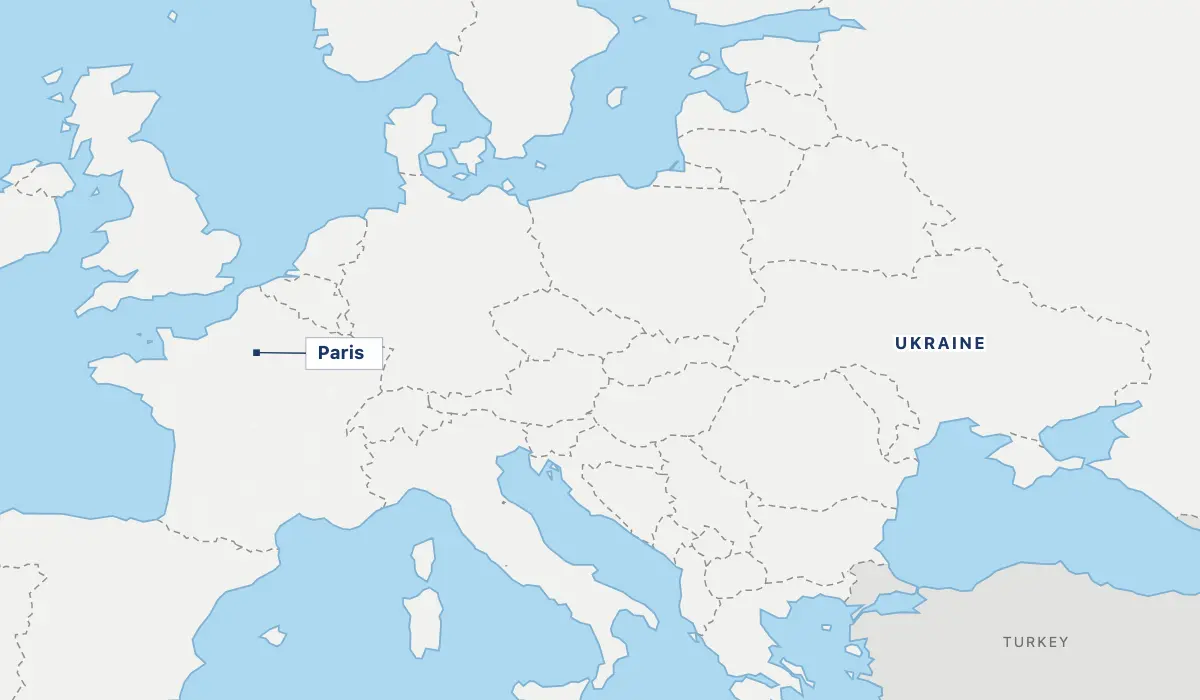
Who and where
Places · 8
- Paris 4
- United States 1
- Europe 3
- Malawi 1
- Persian Gulf 1
- Japan 1
- Iran 1
- Ukraine 1
Organisations · 2
- Barack Obama Administration cabinet 1
- United Nations Environment Programme 1
Related episodes
 28:31
Something Utterly Bizarre Just Happened in China
 Paul J. Warburg
China's technological dominance masks a fundamental weakness caused by massive debt and a lack of domestic energy resources. In the net, in China, what we see is a house of cards that is reported on as if it were a house of steel.
 5:44
Building Out the Power Grid: Large Power Transformers
Peter Zeihan
The United States cannot expand its grid by 50% to support reindustrialization because it lacks domestic large transformer production and faces severe permitting delays. Without significant changes in federal policy and domestic manufacturing, the US will fail to maintain its grid or reindustrialize.
Defending Against Rising Sea Levels
Peter Zeihan
Breaking globalization forces a switch to coal and wood, accelerating climate change and raising sea levels beyond current defenses. Humanity must adapt to rising sea levels as material shortages prevent scaling green energy without globalization.
 19:38
China Just Got Some Terrible News
Paul J. Warburg
China is afraid of losing Western markets and will not use coercion tactics that threaten its economic survival. Today, China, which traditionally has been more adversarial, finally got a really good check put in place on them.

 3:00
The Turn: Demographics Meet Deglobalization
Peter Zeihan
The United States will surrender its position in the Eastern Hemisphere before the end of the Trump administration. Everyone will soon notice major disruptions in agriculture due to these changing global mechanics.

AI-generated summary · model qwen3.5:9b-12k · prompt version whole-5.window-7.combine-10.s-f4be8e ·
video id Ik2Xb01eQ0o ·
Watch on YouTube