Global Shipping Comes Under Attack
 Peter Zeihan
5 min
No country can defend all eight major transit choke points simultaneously. No nation or coalition can keep global sea lanes safe anymore.
Chapters
-
0:00
Current Shipping Situation
Oil flow through the Strait of Hormuz is reduced but not zero.
-
0:15
US Protection Strategy
Local state companies use tankers with transponders off under American watch. This protection method costs tens of millions daily and cannot last forever.
-
2:46
Global Choke Points Limitation
No country can defend all eight major transit choke points simultaneously. The US fails to keep other critical routes like Bab el-Mandeb open.
-
4:08
Rise of Piracy
Piracy is returning in areas where US naval presence is insufficient. No nation or coalition can keep global sea lanes safe anymore. Disrupting shipping flows is easy while defending them remains extremely hard.
Key points
- 0:15
Oil flow through the Strait of Hormuz is reduced but not zero.
- 0:15
Local state companies use tankers with transponders off under American watch.
- 0:15
This protection method costs tens of millions daily and cannot last forever.
- 2:46
No country can defend all eight major transit choke points simultaneously.
- 2:46
The US fails to keep other critical routes like Bab el-Mandeb open.
- 4:08
Piracy is returning in areas where US naval presence is insufficient.
- 4:08
No nation or coalition can keep global sea lanes safe anymore.
- 4:08
Disrupting shipping flows is easy while defending them remains extremely hard.
On the map
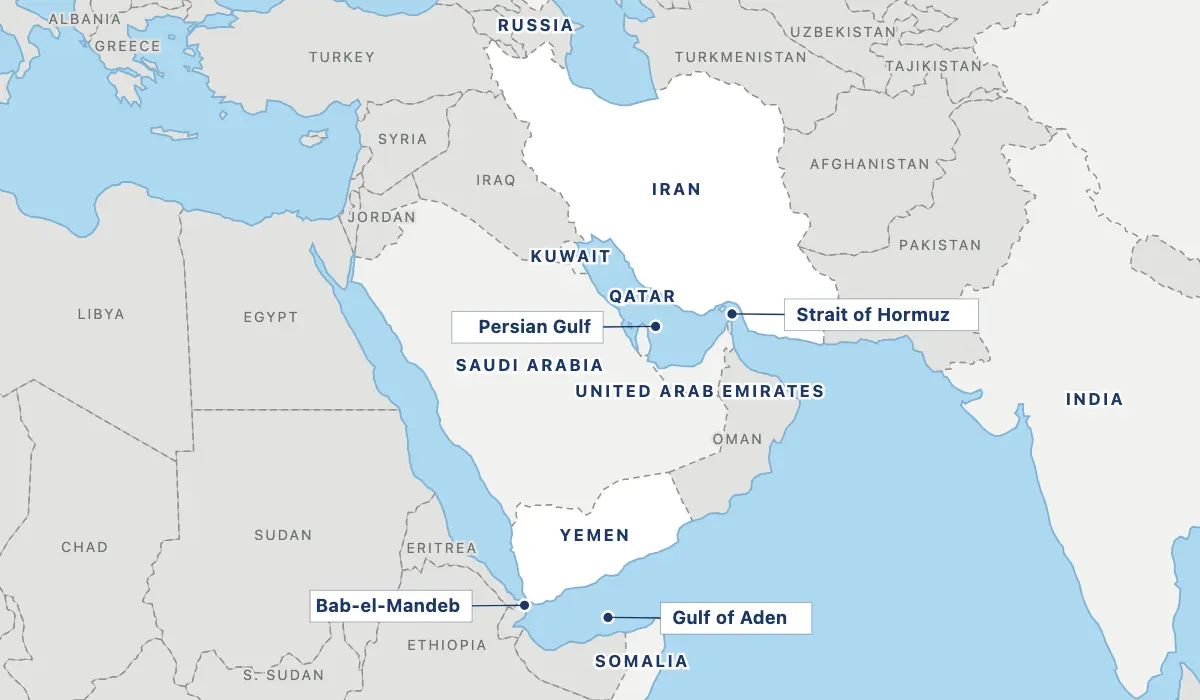
Who and where
Places · 15
- United States 11
- Iran 6
- Persian Gulf 4
- Strait of Hormuz 3
- Gulf of Aden 1
- Bab-el-Mandeb 1
- Yemen 1
- Somalia 2
- Kuwait 2
- Saudi Arabia 2
- People's Republic of China 2
- Qatar 1
- United Arab Emirates 1
- India 1
- Russia 1
Organisations · 1
- first cabinet of Donald Trump 2
Related episodes
 9:10
The Collapse of the World's Strategic Straits - Part 2
Peter Zeihan
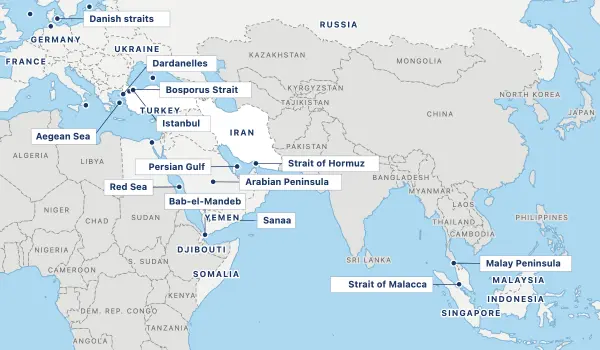
The world is shifting from free international waterways to regulated choke points where local powers charge tolls and restrict global trade. This shift creates a new global order where nations near these straits hold immense leverage over energy and commerce.
 4:49
The Collapse of the World's Strategic Straits
Peter Zeihan
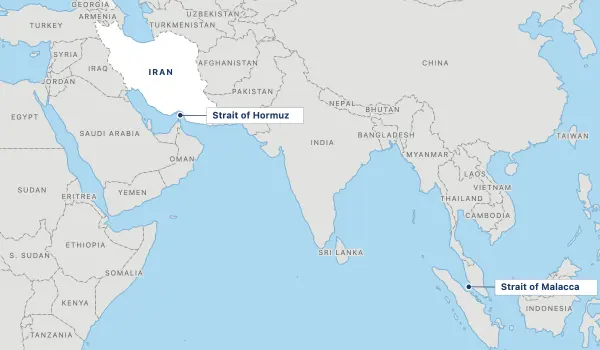
The United States cannot force Iran to keep Hormuz open, leading to its transformation into a toll system. Turning Hormuz into a toll system will formally or informally break over a century of international maritime law.
 6:05
A New Explosive Threat in the Persian Gulf
Peter Zeihan
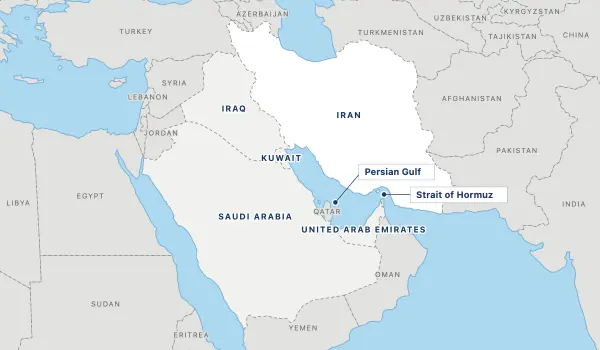
Conventional commercial shipping in the Persian Gulf is probably going to collapse because there is no good defense against speedboat attacks. The cost for the civilian shipping sector to try to cope with this is immense and will absolutely change the cost structure of how shipping happens.
 6:07
The Diesel Shortage Hits America
Peter Zeihan
Diesel shortages will reverberate through the entire American economy for months. The US faces guaranteed transport problems affecting everything moved throughout the country for at least the next 18 months.
Can the British Reopen the Strait of Hormuz?
Peter Zeihan
There is not a military solution to this problem because no other country has enough naval force. The best scenario is that the US pulls out completely and the Iranians just move on, which is not likely.
AI-generated summary · model qwen3.5:9b-12k · prompt version whole-3.window-7.combine-10.s-f4be8e ·
video id 0hPG4-41iUo ·
Watch on YouTube