The Limits of China's Military Reach
 Peter Zeihan
6 min
China utterly lacked the military means in order to protect that trade even within sight of its own shore. But we now know that if they do go down, they're going to be taking the fuel systems of a half a dozen countries that the United States cares a fair amount about as a side effect.
-
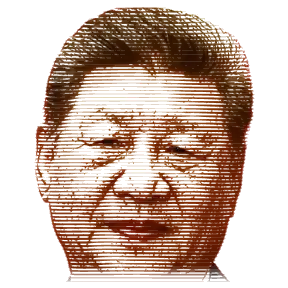 Xi Jinping
Key points
- 0:00
China lacks the military means to protect its trade even within sight of its own shore.
- 0:00
The United States is the only nation with a global navy capable of securing China's trade routes.
- 0:00
China faces three layers of problems regarding its economic model and military reach.
- 0:00
China's chief sources of demand, the United States and European Union, are on other continents.
- 0:00
China's demographics are too horrid to generate enough domestic consumption to absorb its goods.
- 0:00
The developing world lacks the consumption power of the United States and European Union combined.
- 0:00
China must maintain its current trade-dependent system because no other option exists.
- 0:00
The First Island Chain includes Japan, Taiwan, the Philippines, Indonesia, Malaysia, and Singapore.
- 0:00
It is much easier to sink ships in a strait than to dominate an archipelago.
- 2:15
The combined population of the First Island Chain exceeds half a billion people.
- 2:31
The People's Liberation Army Navy lacks the capacity to project power and hold territory.
- 2:31
The Chinese Army is designed primarily for domestic control rather than external power projection.
- 2:31
China remains dependent on the United States to patrol the world and secure sea lines.
- 3:53
The Iran war exposed China's vulnerability to energy disruptions despite fuel switching efforts.
- 3:53
China reduced oil demand by about 2 million barrels per day through fuel switching and EVs.
- 3:53
China remains the world's largest oil importer from the same places as before the conflict.
- 3:53
China may have tethered itself to a few countries by disrupting their energy systems.
Who and where
People · 1
-
Xi Jinping 1
General Secretary of the Chinese Communist Party since 2012 (born 1953)
Photo 1
1. Photo: Presidencia de la República del Ecuador, Public domain, via Wikimedia Commons · Wikidata · redrawn in our house style (Xi Jinping)
Related episodes
 32:42
Something Very Strange is Happening to China’s Military
 Paul J. Warburg
China is a paper tiger using propaganda to appear stronger than it actually is. Investing in cheap drones can overwhelm China's expensive, unproven military image.


China’s Taiwan Problem Just Got Much Worse - with Greg Terry
Paul J. Warburg
The war in Ukraine has made a Chinese invasion of Taiwan impossible through military means. The West must stop its arrogance and learn from Ukraine's example of winning through unity and action.

What Everyone Gets Wrong About China Invading Taiwan
Paul J. Warburg
Threatening invasion benefits China politically while actual invasion brings only costs. The actual danger to Taiwan is not military invasion but a long-term propaganda campaign.
How Was Trump's Trip to Asia?
Peter Zeihan
Trade relationships with aging nations must eventually go to zero regardless of political reasons. The back and forth and the ebb and flow continues without final resolution.
 28:31
Something Utterly Bizarre Just Happened in China
Paul J. Warburg
China's technological dominance masks a fundamental weakness caused by massive debt and a lack of domestic energy resources. In the net, in China, what we see is a house of cards that is reported on as if it were a house of steel.
AI-generated summary · model qwen3.5:9b-12k · prompt version whole-3.window-7.combine-10.s-f4be8e ·
video id 7JC6EKkUGKY ·
Watch on YouTube