A New Explosive Threat in the Persian Gulf
 Peter Zeihan
6 min
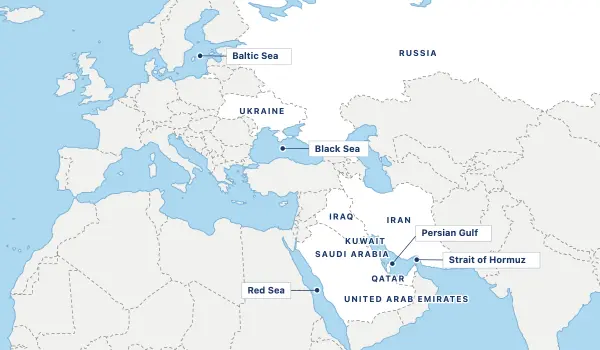
Conventional commercial shipping in the Persian Gulf is probably going to collapse because there is no good defense against speedboat attacks. The cost for the civilian shipping sector to try to cope with this is immense and will absolutely change the cost structure of how shipping happens.
Chapters
-
0:00
The New Shipping Strategy
Major Arab nations in the Persian Gulf are using their own carriers to move crude oil out of the region before transferring it to other tankers bound for East Asia. This method allows them to bypass direct military threats while keeping a sizable volume of exports flowing at over 80% of pre-war levels. However, this strategy incurs hidden costs of $20 to $40 per barrel that are not reflected in global crude prices.
-
1:37
The Iranian Tactical Shift
Iran has shifted from using limpet mines below the waterline to attaching them above the waterline on speedboats, a tactic reminiscent of the Iran-Iraq war. This approach is highly effective against civilian commercial ships that lack defenses and cannot be easily countered by standard military destroyers. The attack occurred at night, exploiting the vulnerability of unarmored vessels with no onboard weapons or trained personnel.
-
2:41
The Collapse of Commercial Shipping
Conventional commercial shipping in the Persian Gulf is likely to collapse as private vessels avoid the region due to the lack of defense against speedboat attacks. Operators will need to implement quasi-militarized measures like armed crews or drone networks, which adds immense expense and operational difficulty. The United States lacks the capacity to patrol the entire Strait of Hormuz effectively against these low-cost, high-frequency threats.
Key points
- 0:00
Major Arab nations are using their own crude carriers to transfer oil outside the Persian Gulf before sending it to East Asia.
- 0:00
This indirect shipping method costs importers an additional $20 to $40 per barrel not reflected in global prices.
- 1:30
Iran utilized speedboats to attach limpet mines above the waterline on a ship, mimicking tactics from the 1980s Iran-Iraq war.
- 1:30
Limpet mines are cheap, effective weapons that can cause huge damage while remaining largely deniable.
- 1:30
Iran possesses hundreds or thousands of speedboats capable of harassing civilian vessels without needing a traditional navy.
- 1:30
Standard military destroyers are ineffective against swarms of motorboats attacking unarmed commercial ships.
- 1:30
Commercial shipping in the Persian Gulf will likely collapse if these attacks continue within the next week.
- 1:30
Shipping operators must adopt quasi-militarized defenses like armed crews or drone networks to survive in these zones.
- 3:43
Most commercial ship crews are Filipino nationals with no military training, making them vulnerable targets.
- 4:28
The United States spends half a billion dollars daily but lacks the capacity to patrol the Strait of Hormuz effectively.
- 4:28
Iran can easily extend attacks beyond the Strait of Hormuz to hit ships anchored in the Gulf.
On the map
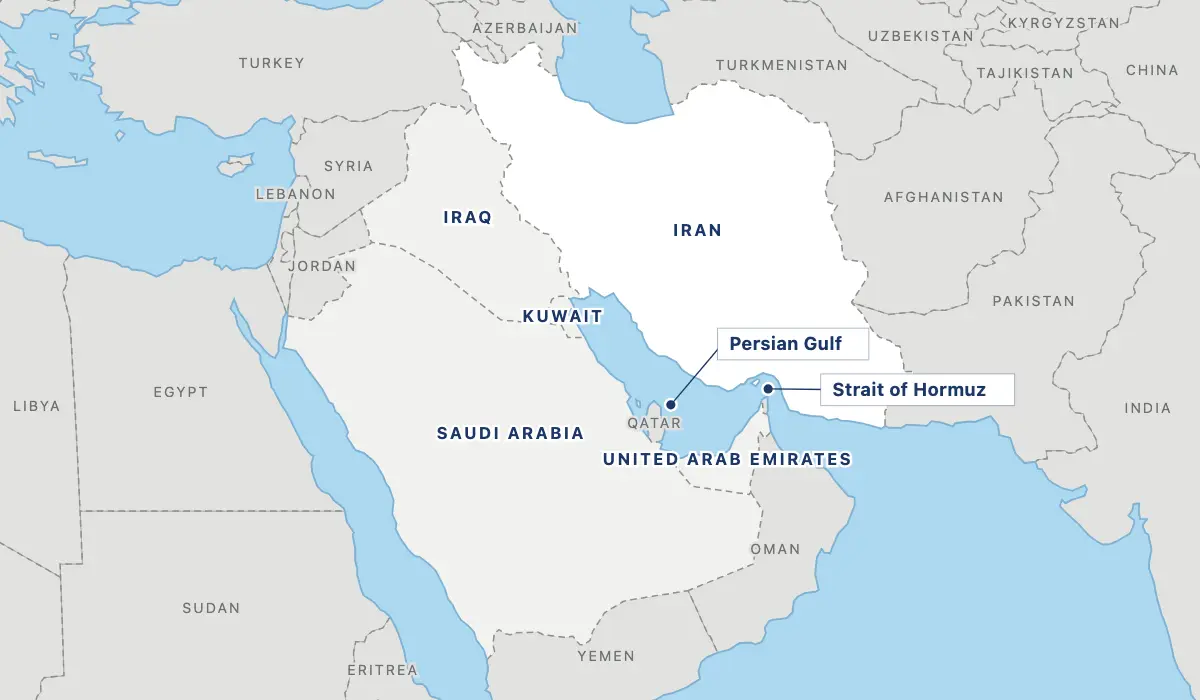
Who and where
Places · 11
- Iran 11
- Persian Gulf 5
- Strait of Hormuz 1
- East Asia 1
- Philippines 1
- United Arab Emirates 1
- Kuwait 1
- Iraq 1
- Saudi Arabia 1
- Ukraine 1
- United States 1
Related episodes
 5:27
Global Shipping Comes Under Attack
Peter Zeihan
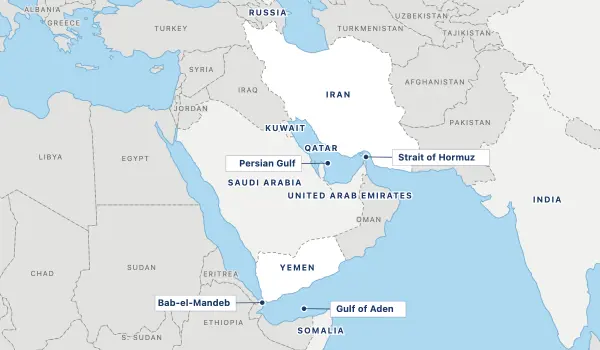
No country can defend all eight major transit choke points simultaneously. No nation or coalition can keep global sea lanes safe anymore.
 9:10
The Collapse of the World's Strategic Straits - Part 2
Peter Zeihan
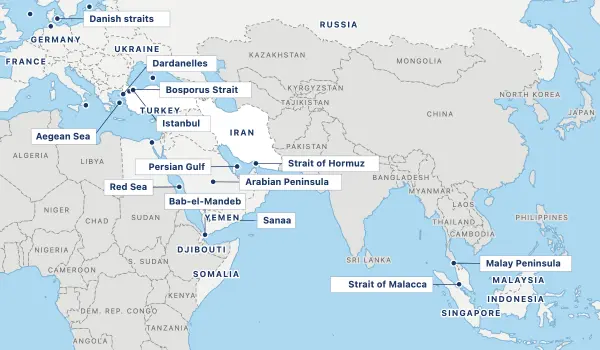
The world is shifting from free international waterways to regulated choke points where local powers charge tolls and restrict global trade. This shift creates a new global order where nations near these straits hold immense leverage over energy and commerce.
 4:49
The Collapse of the World's Strategic Straits
Peter Zeihan
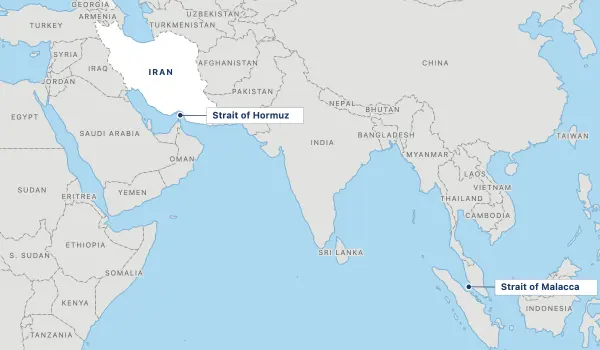
The United States cannot force Iran to keep Hormuz open, leading to its transformation into a toll system. Turning Hormuz into a toll system will formally or informally break over a century of international maritime law.
 6:18
The Great Oil Split Has Begun
Peter Zeihan
The United States has a functional ceiling on its energy prices of around $70 while Europe and Asia pay double or triple that amount due to transport disruptions. This fragmented market state is going to be the norm for the bulk of the next 20 years.
 6:07
The Diesel Shortage Hits America
Peter Zeihan
Diesel shortages will reverberate through the entire American economy for months. The US faces guaranteed transport problems affecting everything moved throughout the country for at least the next 18 months.
AI-generated summary · model qwen3.5:9b-12k · prompt version whole-5.window-7.combine-10.s-f4be8e ·
video id Ik4QFH6ZJuY ·
Watch on YouTube