The Problem with the U.S. Power Grid
 Peter Zeihan
5 min
The U.S. cannot unify its power grids soon because geography and local authority barriers prevent efficient long-distance transmission. Real progress requires adjacent jurisdictions to share resources before attempting national grid unification.
Chapters
-
0:00
The Scale of Grid Expansion Needed
The U.S. must expand its power grid by at least half to build industrial infrastructure for a post-globalized world. If data centers are included, the required build-out increases significantly to between 75 and 100 percent. This massive expansion is necessary because the current system cannot handle the energy demands of a deglobalizing economy without major upgrades.
-
0:53
The Physical and Political Barriers to Unification
The U.S. power system is split into three distinct grids: the Western, Eastern, and Texas interconnections, separated by geography like the Rocky Mountains. Linking these grids requires High Voltage Direct Current stations, but long-distance transmission loses efficiency unless a superconductor technology exists. Additionally, local jurisdictions control most electricity production, making it difficult to build new transmission lines across multiple regulatory zones.
-
4:28
The Timeline for Meaningful Change
Unifying the grids requires breaking down barriers between authorities before building long-range transmission or converter systems. This process will not happen soon because it depends on a shift in how Americans view local versus federal authority. Real progress relies first on adjacent jurisdictions sharing resources rather than immediate national unification.
Key points
- 0:00
The U.S. must expand the grid by at least half to support industrial infrastructure.
- 0:00
Including data centers would require a 75 to 100% build-out of the system.
- 0:25
The U.S. power system is split into three grids: Western, Eastern, and Texas.
- 1:37
Linking these grids requires High Voltage Direct Current stations to convert alternating current.
- 1:37
Long-distance power transmission loses efficiency unless a low-cost superconductor exists.
- 1:37
Most electricity is produced less than 50 miles from where people live.
- 1:37
Hundreds of local power producers control generation rather than a few large ones.
- 1:37
New transmission lines must cross multiple jurisdictions with different regulatory structures.
- 4:00
Grid unification depends on a shift in views regarding local versus federal authority.
- 5:08
Progress requires adjacent jurisdictions to share resources before building national converters.
On the map
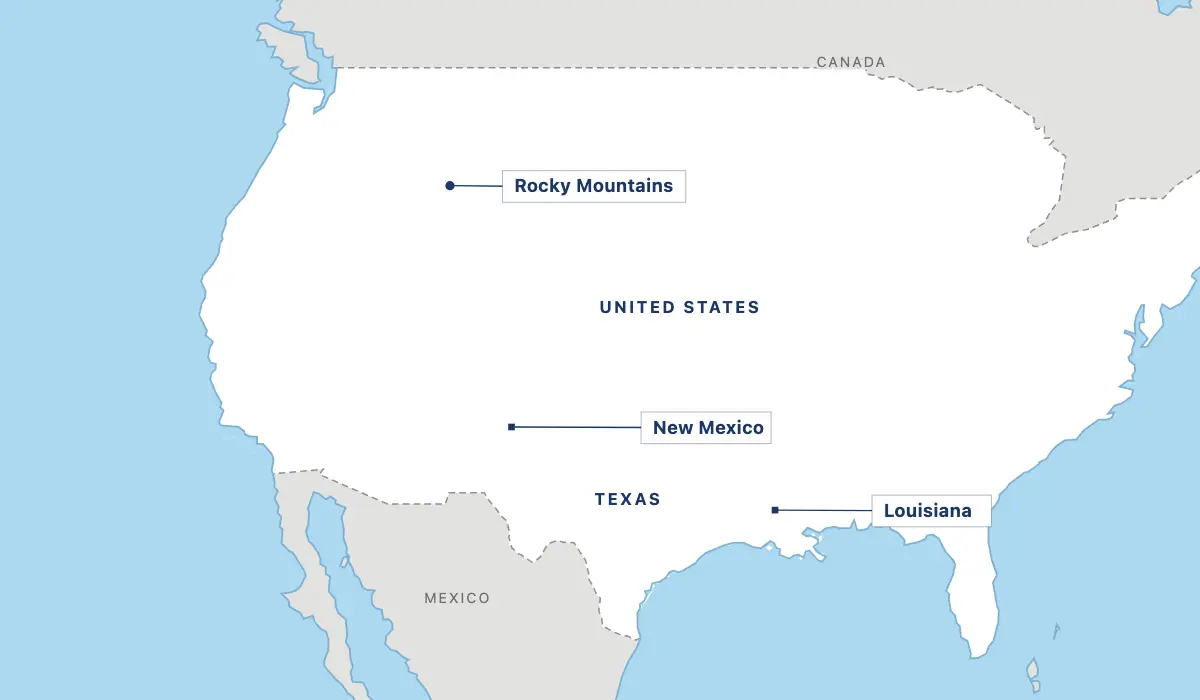
Who and where
Places · 8
- Texas 4
- United States 5
- New Mexico 1
- Rocky Mountains 1
- Louisiana 1
- France 1
- Germany 1
- Russia 1
Related episodes
 5:44
Building Out the Power Grid: Large Power Transformers
Peter Zeihan
The United States cannot expand its grid by 50% to support reindustrialization because it lacks domestic large transformer production and faces severe permitting delays. Without significant changes in federal policy and domestic manufacturing, the US will fail to maintain its grid or reindustrialize.
 6:11
Trump Might Be Onto Something with Data Center Energy
Peter Zeihan
The proposal indicates significant changes are coming if pushed forward. The proposal is a potential solution to current problems but faces serious political hurdles.

 13:20
Data Centers: A Necessary Evil...Kinda
Peter Zeihan
Data centers are necessary for modern economic function because removing them would force a return to manual paper-based systems resulting in significantly lower standards of living. While data centers have negative effects like high energy use, eliminating them would condemn millions to low-value jobs and drastically reduce personal incomes.
 7:56
How To Ban Diesel Exports
Peter Zeihan
Export bans without infrastructure changes create oversaturation that reduces domestic energy security. The conversation is misplaced until distribution systems are fixed alongside any bans.

 5:38
The Paris Accords Can't Stop Climate Change
Peter Zeihan
The Paris Accords cannot stop climate change because they lack necessary funding and rely on a globalized system that is now breaking down. By the end of the century, we need to be starting to consider things like five and maybe even six.
AI-generated summary · model qwen3.5:9b-12k · prompt version whole-5.window-7.combine-10.s-f4be8e ·
video id yVkwt6WjIc4 ·
Watch on YouTube