How To Ban Diesel Exports
 Peter Zeihan
8 min
Export bans without infrastructure changes create oversaturation that reduces domestic energy security. The conversation is misplaced until distribution systems are fixed alongside any bans.
-
 Chris Wright
-
 Donald Trump
Chapters
-
0:00
The Problem of Distribution
US energy policy fails because production and population are geographically mismatched.
-
1:02
Crude Oil Export Ban Consequences
Banning crude exports without infrastructure causes oversaturation and reduced production.
-
3:30
Diesel Export Ban Consequences
A diesel ban creates price crashes in the Gulf and reduces total national supply.
-
4:59
The Need for Structural Changes
Bans alone are useless; they must be paired with refinery updates and distribution fixes.
-
5:29
Required Refinery Adjustments
US refineries must switch from imported heavy crude to domestic light sweet crude. New pipelines and water transport are needed to move fuel from production zones to consumers.
Key points
- 0:24
US energy issues stem from mismatched population and resource locations.
- 1:02
Export bans create oversaturation that discourages domestic crude production.
- 1:02
Shale wells produce most output in the first year, causing rapid supply drops.
- 5:29
US refineries are designed for heavy crude, not domestic light sweet oil.
- 3:30
Diesel bans crash prices in the Gulf while reducing total national supply.
- 3:30
Officials oppose bans because they understand the resulting economic damage.
- 4:59
Bans must be paired with new pipelines and water transport mandates.
On the map
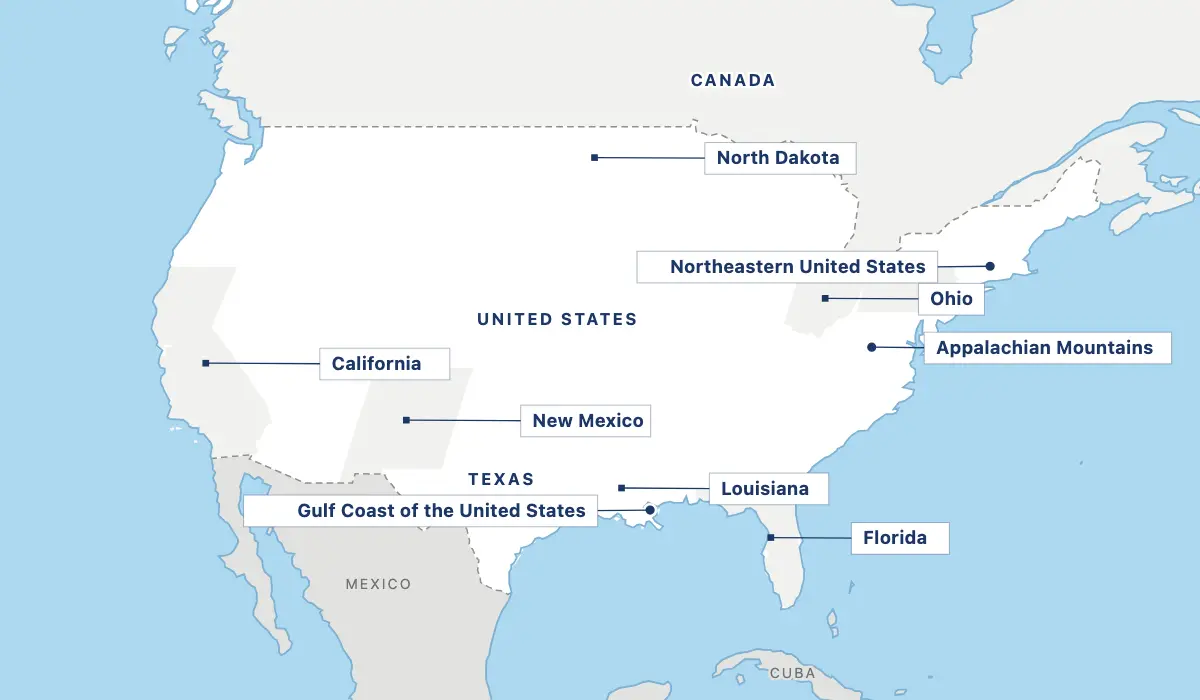
Who and where
Places · 15
- United States 21
- Texas 6
- North Dakota 3
- Northeastern United States 3
- Louisiana 3
- Gulf Coast of the United States 1
- California 3
- Florida 2
- Appalachian Mountains 1
- Ohio 1
- Pennsylvania 1
- New Mexico 1
- Canada 1
- People's Republic of China 1
- Russia 1
People · 2
-
Chris Wright 1
United States Secretary of Energy (born 1965)
Photo 1
-
Donald Trump 1
President of the United States (2017–2021; since 2025)
Photo 2
1. Photo: U.S. Department of Energy, Public domain, via Wikimedia Commons · Wikidata · redrawn in our house style (Chris Wright)
2. Photo: Daniel Torok, Public domain, via Wikimedia Commons · Wikidata · redrawn in our house style (Donald Trump)
Related episodes
 6:07
The Diesel Shortage Hits America
Peter Zeihan
Diesel shortages will reverberate through the entire American economy for months. The US faces guaranteed transport problems affecting everything moved throughout the country for at least the next 18 months.
 5:44
Building Out the Power Grid: Large Power Transformers
Peter Zeihan
The United States cannot expand its grid by 50% to support reindustrialization because it lacks domestic large transformer production and faces severe permitting delays. Without significant changes in federal policy and domestic manufacturing, the US will fail to maintain its grid or reindustrialize.
U.S. Oil Export Restrictions Coming Soon
Peter Zeihan
The U.S. Government must restrict energy exports to control prices as the international system loses energy. The administration will likely choose an export tax because it avoids supply shortages while raising domestic prices.
 6:18
The Great Oil Split Has Begun
Peter Zeihan
The United States has a functional ceiling on its energy prices of around $70 while Europe and Asia pay double or triple that amount due to transport disruptions. This fragmented market state is going to be the norm for the bulk of the next 20 years.
Iran War Winners and Losers: North American Energy
Peter Zeihan
High oil prices will force a U.S. export ban and refinery adaptation that hurts producers short-term. The conventional wisdom that a lot of people saw in the first couple of weeks of the conflict really doesn't apply.
AI-generated summary · model qwen3.5:9b-12k · prompt version whole-3.window-7.combine-10.s-f4be8e ·
video id WsyPVdDjs2Y ·
Watch on YouTube